Offer validation
How to validate a digital product idea before building it
Good validation reduces a specific uncertainty. It does not collect compliments for a concept that nobody has tried to use.
Start with a falsifiable question
“Do people like my idea?” is too soft to guide a decision. Ask instead: “Will independent service-business owners give an email address to get a one-page launch checklist?” or “Will three qualified prospects complete a sample workflow without live help?”
Your question needs a defined person, behavior, time window, and threshold. That makes an inconclusive result visible instead of letting enthusiasm fill the gap.
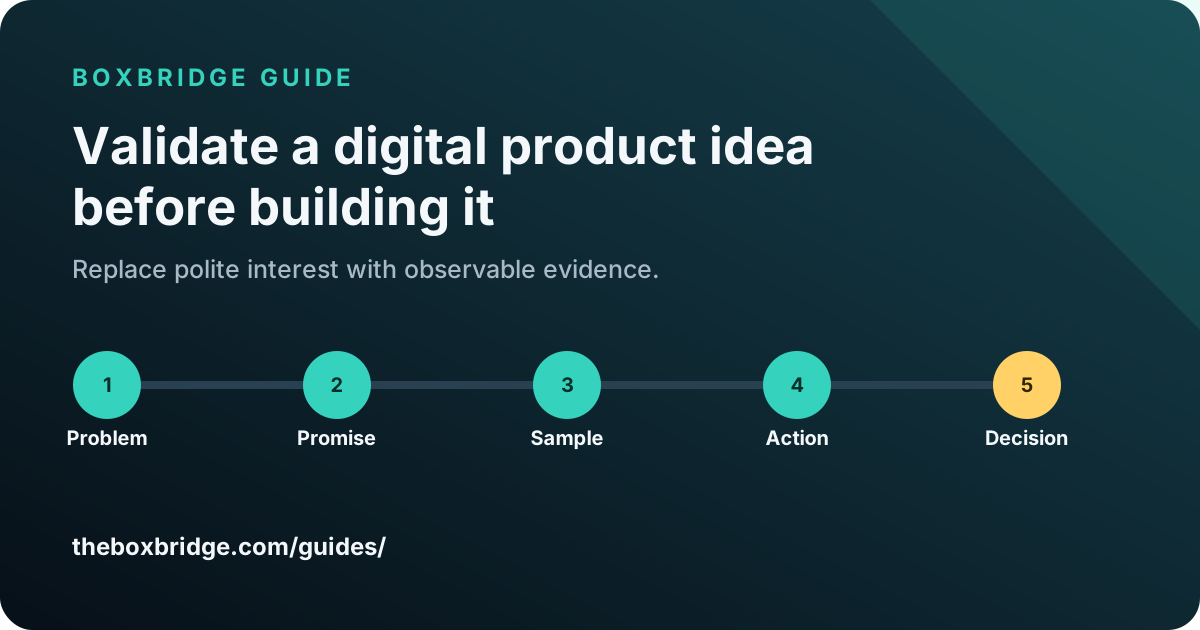
Five validation signals, from weak to strong
-
Problem evidence
Find repeated descriptions of the same expensive, frequent, or frustrating job in customer conversations, support threads, reviews, or your own operational records. Save exact themes, not personal data.
-
Promise clarity
Show a plain-language outcome to people who fit the audience. Ask them to explain what they expect to receive. Confusion here is a messaging failure, not a customer failure.
-
Sample use
Build the smallest honest artifact that demonstrates the method: one worksheet, one lesson, one template, or one completed example. Watch whether someone can use it without an explanation that will not exist after purchase.
-
Committed action
Ask for a meaningful but proportionate next step: join a double-opt-in list, book a review, request the sample, or start a clearly labeled checkout. A like or “sounds great” is interest, not commitment.
-
Paid evidence
A completed purchase is strongest, but interpret it honestly. One owner-controlled test confirms the transaction path, not demand. Several unrelated qualified buyers are stronger evidence of a repeatable market.
Use a decision rule before the test
Write three outcomes in advance:
- Proceed: the threshold is met and the evidence comes from the intended audience.
- Revise: the problem is real but the promise, format, or path caused consistent friction.
- Stop: qualified people do not recognize the problem or take the next step after a fair test.
Example: over fourteen days, invite twenty qualified people to one useful sample. Proceed if five request it and two complete it; revise if requests arrive but completion fails; stop if fewer than two qualified people request it.
Common false positives
- Friends agreeing because they want to be supportive.
- Traffic from people outside the intended audience.
- A transaction performed by the owner to test delivery.
- Survey answers about hypothetical purchases without a real next step.
- One viral post that does not produce repeatable visits, signups, or purchases.
Plan the smallest fair test
The BoxBridge planner helps you define the offer, audience, channel, and measurable result without committing to a full build.